Click on the above banner for full image and description
Bonhoeffer on Stupidity24-Oct-2021
The following is taken from a circular letter, addressing many topics, written to three friends
and co-workers in the conspiracy against Hitler, on the tenth anniversary of Hitler's accession to
the chancellorship of Germany.
"Stupidity is a more dangerous enemy of the good than malice. One may protest against evil; it
can be exposed and, if need be, prevented by use of force. Evil always carries within itself the
germ of its own subversion in that it leaves behind in human beings at least a sense of unease.
Against stupidity we are defenseless. Neither protests nor the use of force accomplish anything
here; reasons fall on deaf ears; facts that contradict one’s prejudgment simply need not be
believed- in such moments the stupid person even becomes critical – and when facts are irrefutable
they are just pushed aside as inconsequential, as incidental. In all this the stupid person, in
contrast to the malicious one, is utterly self-satisfied and, being easily irritated, becomes
dangerous by going on the attack. For that reason, greater caution is called for than with a
malicious one. Never again will we try to persuade the stupid person with reasons, for it is
senseless and dangerous.
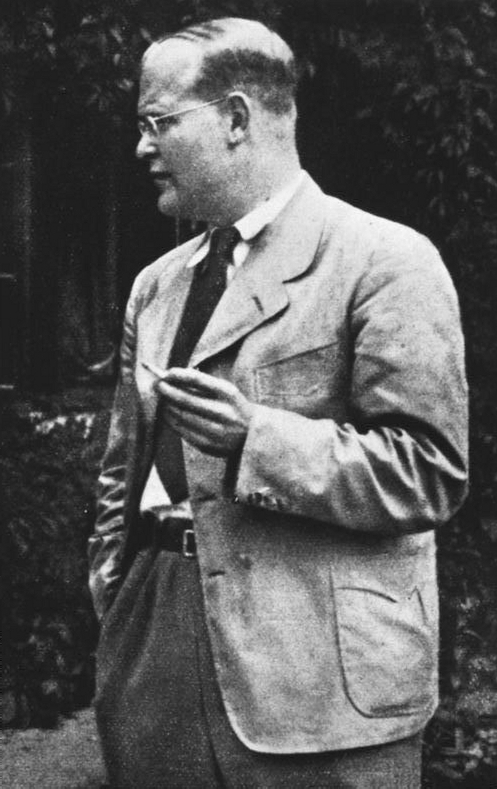
Dietrich Bonhoeffer (1906-1945) was a Lutheran pastor and theologian. He was also staunchly
and vociferously anti-Nazi. Bonhoeffer was jailed, accused of taking part in a plot to
assassinate Hitler. He was hanged by the Nazis just as the Nazi regime was collapsing in total
defeat. He was by this certainly the victim of Nazi stupidity. His works are well known,
especially books like Life Together which is often read
in Lutheran circles.
"If we want to know how to get the better of stupidity, we must seek to understand its nature.
This much is certain, that it is in essence not an intellectual defect but a human one. There are
human beings who are of remarkably agile intellect yet stupid, and others who are intellectually
quite dull yet anything but stupid. We discover this to our surprise in particular situations. The
impression one gains is not so much that stupidity is a congenital defect, but that, under certain
circumstances, people are made stupid or that they allow this to happen to them. We note further
that people who have isolated themselves from others or who live in solitude manifest this defect
less frequently than individuals or groups of people inclined or condemned to sociability. And so it
would seem that stupidity is perhaps less a psychological than a sociological problem. It is a
particular form of the impact of historical circumstances on human beings, a psychological
concomitant of certain external conditions. Upon closer observation, it becomes apparent that every
strong upsurge of power in the public sphere, be it of a political or of a religious nature, infects
a large part of humankind with stupidity. It would even seem that this is virtually a
sociological-psychological law. The power of the one needs the stupidity of the other. The process
at work here is not that particular human capacities, for instance, the intellect, suddenly atrophy
or fail. Instead, it seems that under the overwhelming impact of rising power, humans are deprived
of their inner independence, and, more or less consciously, give up establishing an autonomous
position toward the emerging circumstances. The fact that the stupid person is often stubborn must
not blind us to the fact that he is not independent. In conversation with him, one virtually feels
that one is dealing not at all with a person, but with slogans, catchwords and the like that have
taken possession of him. He is under a spell, blinded, misused, and abused in his very being. Having
thus become a mindless tool, the stupid person will also be capable of any evil and at the same time
incapable of seeing that it is evil. This is where the danger of diabolical misuse lurks, for it is
this that can once and for all destroy human beings.
"Yet at this very point it becomes quite clear that only an act of liberation, not instruction,
can overcome stupidity. Here we must come to terms with the fact that in most cases a genuine
internal liberation becomes possible only when external liberation has preceded it. Until then we
must abandon all attempts to convince the stupid person. This state of affairs explains why in such
circumstances our attempts to know what the people really think are in vain and why, under these
circumstances, this question is so irrelevant for the person who is thinking and acting responsibly.
The word of the Bible that the fear of God is the beginning of wisdom declares that the internal
liberation of human beings to live the responsible life before God is the only genuine way to
overcome stupidity.
"But these thoughts about stupidity also offer consolation in that they utterly forbid us to
consider the majority of people to be stupid in every circumstance. It really will depend on whether
those in power expect more from people’s stupidity than from their inner independence and wisdom."
We Are All Africans9-July-2020
"We are all Africans" could be taken as a statement of solidarity with African Americans in
these recent times. But however you take it, it's really a statement of biological fact that
should unite us all as one people. According to scientists, we humans evolved over a long time in
Africa, and more recently evolved over nearly the entire planet to become what we are today.
There are no "Races of Mankind", as some people may still assume, as if different segments of the
humanity had different roots. According to scientists, our true ancestry points back to a common
root and a single subsequent history.
THE IDEA OF “RACE” represents one of the greatest errors, if not the greatest error,
of our time, and the most tragic. What “race” is everyone seems to know, and is only too eager to
tell. - Ashley Montegu in "Man's Most Dangerous Myth: The Fallacy of Race"1, 1945.
The Big Picture
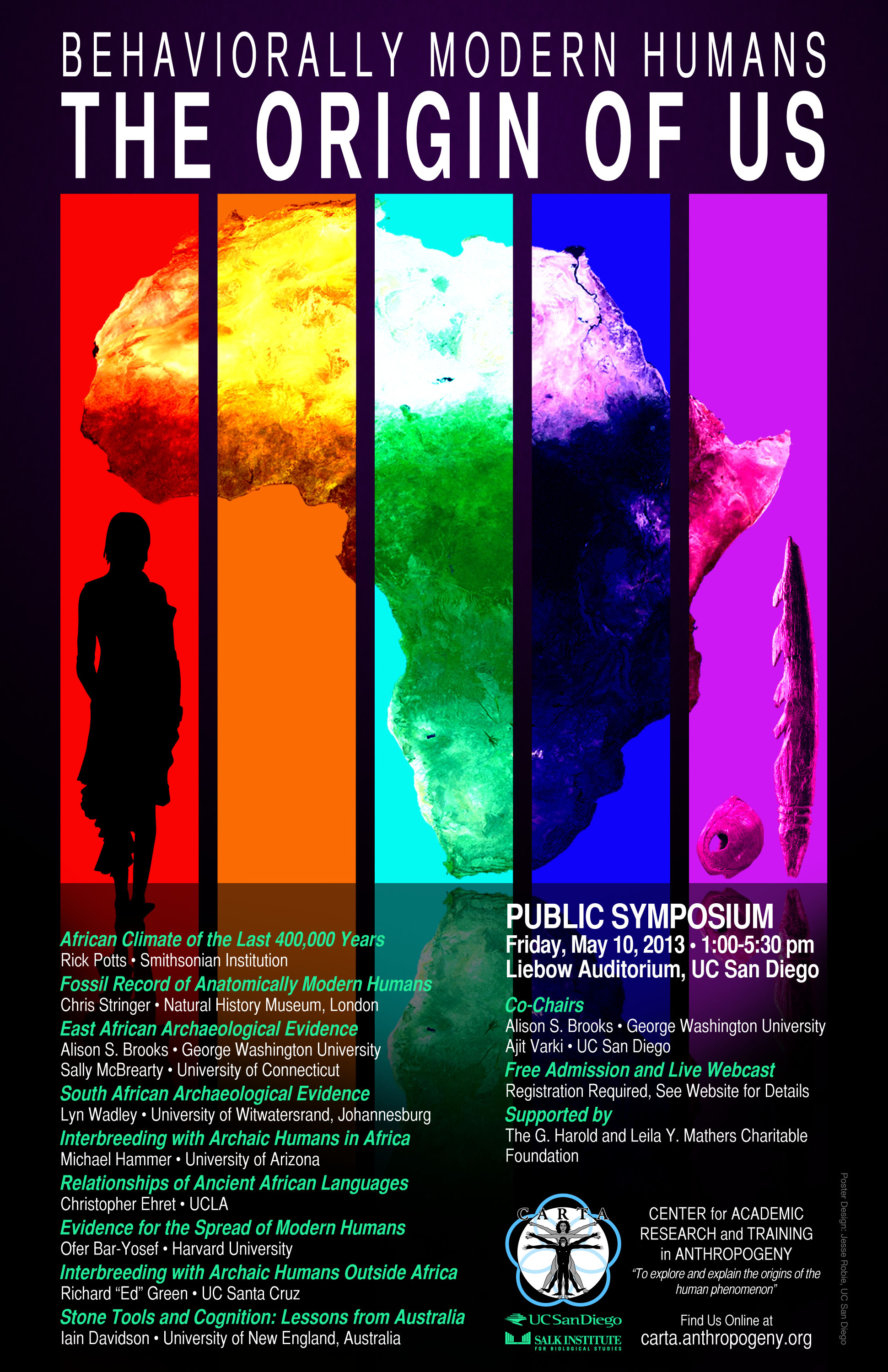
Poster for a public symposium in 2013 given by the Center for Academic Research
and Training in Anthropogeny (CARTA). Athropogeny is the study of Human origins. This is a
review of but a tiny bit of the scientific evidence for the "Out of Africa" hypothesis. See
links at bottom of this article.
What scientists know today is that all modern humans around the world, without exception, can
trace their ancestry to Africa, and Africa only. The genomes of all humans outside of
Africa look like a subset of the genomes of today's Africans.
Our species evolved in Africa from earlier, or archaic, human forms2. At some point, maybe 300,000 years ago, across the
African continent there began a continuous process of interbreeding, or gene flow, between
groups of similar archaic human populations. Gene flow, the exchange of genetic material,
continued between human populations even as humans spread out of Africa and throughout most of
the world. And this includes the important interbreeding with the Neanderthals and Denisovans, other forms of
humans who had already dispersed from Africa perhaps 400,000 or more years ago. This program of
continuous and widespread gene flow between human groups seems to be the thing responsible for
us being the only kind of human in the world today.
Where Do We Come From?
According to Jean-Jaques Hueblin, Director of the Department of Human Evolution at the
Max Planck Institute for Evolutionary Anthropology in Leipzig, throughout all of Africa perhaps
beginning 500,000 years ago there was a great diversification of hominins showing various
anatomical characters many of which are now part of our physical constitution. According to
CARTA4, "Available evidence indicates that all humans living today are derived from a
relatively small population that arose in Africa beginning over 200,000 years ago, spreading
throughout Africa and eventually the rest of the planet."
Africa is a big continent three times the size of the United States of America. Yet these
earlier versions of ourselves seem to have spread their influence, technology, and themselves,
throughout Africa. Hueblin and his colleagues have added a big chunk of data for this view
coming from Jebel
Irhoud in Morocco in Northwest Africa. Dated to about 300,000 years ago, this site of early
modern human occupation yielded examples of symbolic behavior such as shell beads and many
examples of stone tools which look much like beads and tools around the rest of Africa at the
time.
I would summarize the situation as a continent-wide culture spread throughout Africa. And
because these various peoples exchanged genes, there seems to have been a continent-wide
emergence of a new type of far ranging human, namely us.
And of course it need hardly be pointed out that we are spreading ourselves still over the
globe and sustaining intermarriages between people of different cultures. And we do this big
time. It's a thing.
And I might add, as far as the human male is concerned, there seems to be
little in terms of breeding requirements beyond bipedality and female. (And then not necessarily
female. And again not necessarily bipedal! And thereby hangs a tale, I'm sure.)
How Did We Get Here?
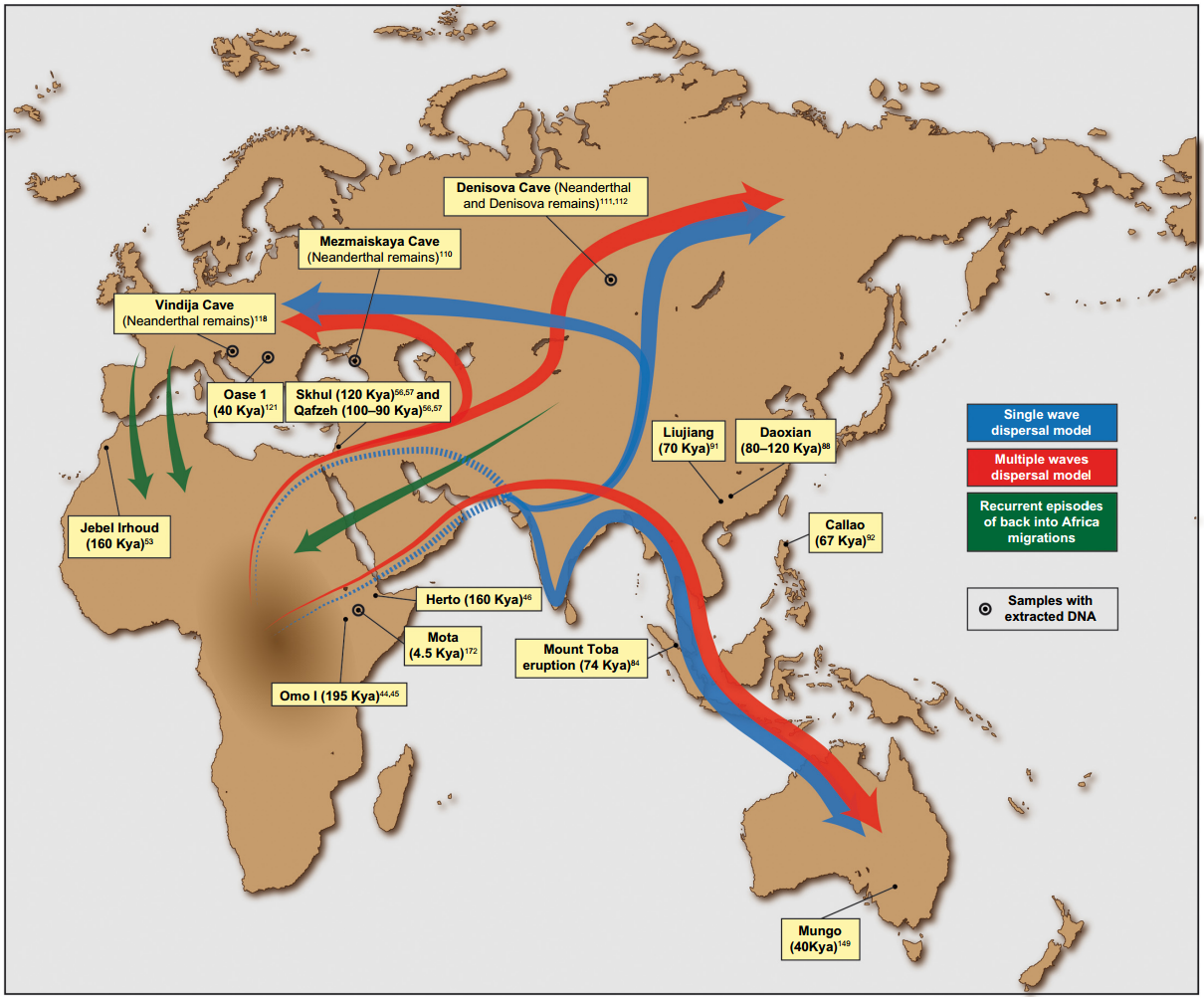
Putative migration waves out of Africa and back migrations into the continent, as well as the
locations of major ancient human remains and archaeological sites (López et al.2015).
The most recent migration of modern humans out of Africa has been dated at from 50,000 to
60,000 years ago. This latest out of Africa migration, see the figure at the right, is thought
to be more or less the point in our evolution that set us up as the single surviving species of
humans and the most successful throughout the world.
There are evidences of earlier migrations of earlier human types, such as the Neanderthals
and the Denisovans at about 400,000 years ago. But also, even before, it is known by the fossil
record that some Homo
erectus migrated out of Africa at some much earlier time, perhaps one million years
ago.
Homo
sapiens, us, reached Australia about 45,000 to 50,000 years ago, and reached Europe
by 40,000 to perhaps 45,000 years ago. And lastly, we migrated to the Americas by 13,000
to 15,000 years ago.
And here the plot thickens, for here modern humans in Europe came into contact with the
Neanderthals and Denisovans and interbred, exchanged genes, with them. And also the moderns
directly competed with these archaic types for resources. Homo sapiens created rock art
paintings and clearly symbolic artifacts that were part of a wider culture of much more modern
tool making, and the extension of long trade routes. We have always kept in touch with each
other over long distances in technology, language, and genetics.
At the same time, you'll see by examining the dispersion map above, that there were also
migrations back into Africa, apparently adding to the gene flow in all directions. For example,
Neanderthal genes are widely detected in European populations and are now being found in lesser
degree within African populations today. And so for many reasons we are today a single species
of highly related individuals.
Homo sapiens is the only surviving species in the genusHomo. That is a very odd thing in
the world, according to scientists. Most usually, any Genus contains multiple species. There
are several species of the genus Pan, the chimpanzees and bonobos. Most genera have many
species. How did we become the only species of Homo? It's as if our evolution proceeded at the
genus level and not at the species level. I suspect we took off on a new path of evolution when
we welded together various earlier species and gained from them new and successful genes. We
simply absorbed all the other species, as least in part, and out competed all of the remainder.
And so, Why Racism?
Humans are proud of civilization. So proud that many of us today think that whatever came
before does not count for much. That view would be completely wrong on two counts. First, humans
developed high intelligence long before civilization. And second, the past is surely not empty
of world changing revolutions in thought, culture, and technology. Although we may no longer be
aware of many of them.
While we may find cruelty and tribal war at any time in the long human past, racism as we
know it today is a product of civilization and not an inherent part of human nature. Racism, the
belief in the existence of superior and inferior identifiable biologically determined races of
human beings, came about only within the last 500 years or so, during the period of increasing
colonialism and imperialism. But it was a political, not a scientific biological, impulse.
Driven by greed, our racism grew along with slave trading and cotton and sugar cane growing.
And it took an insidious turn during the earliest parts of the 20th century under the
guise of improving the human race in the new pseudo-science of Eugenics5,6,8. These
new ideas of race were widespread in the United States and Europe, and played a commanding role
in the Nazi quest for a pure Germanic race. That of course led to the holocaust.
Real science, meanwhile, since the 1930's, had been increasingly aware of the fallacy in
racist thinking. But that has not been enough to wipe out the practice.
So today we are charged with the final wiping out of racism. It is to the reunification of
all the people on Earth that we are now called to dedicate ourselves.
We need to return to our true roots, born in Africa.
Simulated Heliacal Rising of Sirius 3000 BC
Close
×
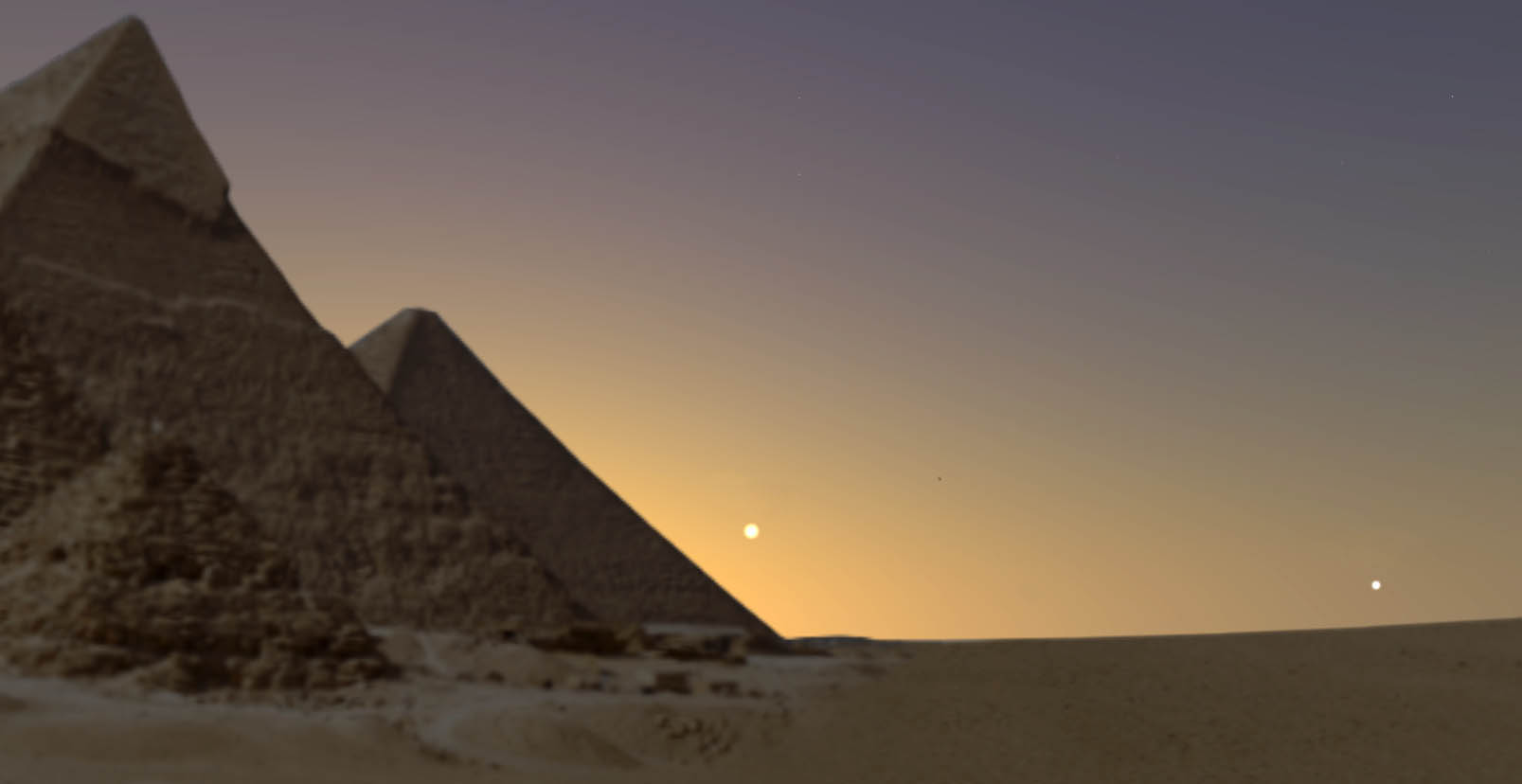
A simulation of the rising star Sirius (on the right), looking east from Memphis, Egypt,
on 15 July, 3000 BCE. In those days Sirius would rise just before the sun on about 1 July.
This was a signal to the Egyptians of the coming flooding of the Nile river, the event on
which Egypt's economy was based. The other bright object, next to the pyramids, is the
planet Venus. Humans and other animals have probably always used the motion of the Sun and
stars to tell the time of day and night and season, all in their own native ways. This
astronomical event and its observation is one of the beginnings of our timeline of recorded
history. And nowadays we have learned how to extend our timeline into the deep past by
methods such as archeology, paleontology, and cosmology.
Credit: astronomer Bob
King. Visit his Website
here. Read his article on
Sirius in Sky and Telescope Magazine here.